Tuesday, May 28, 2013

Amy Marshall Interview


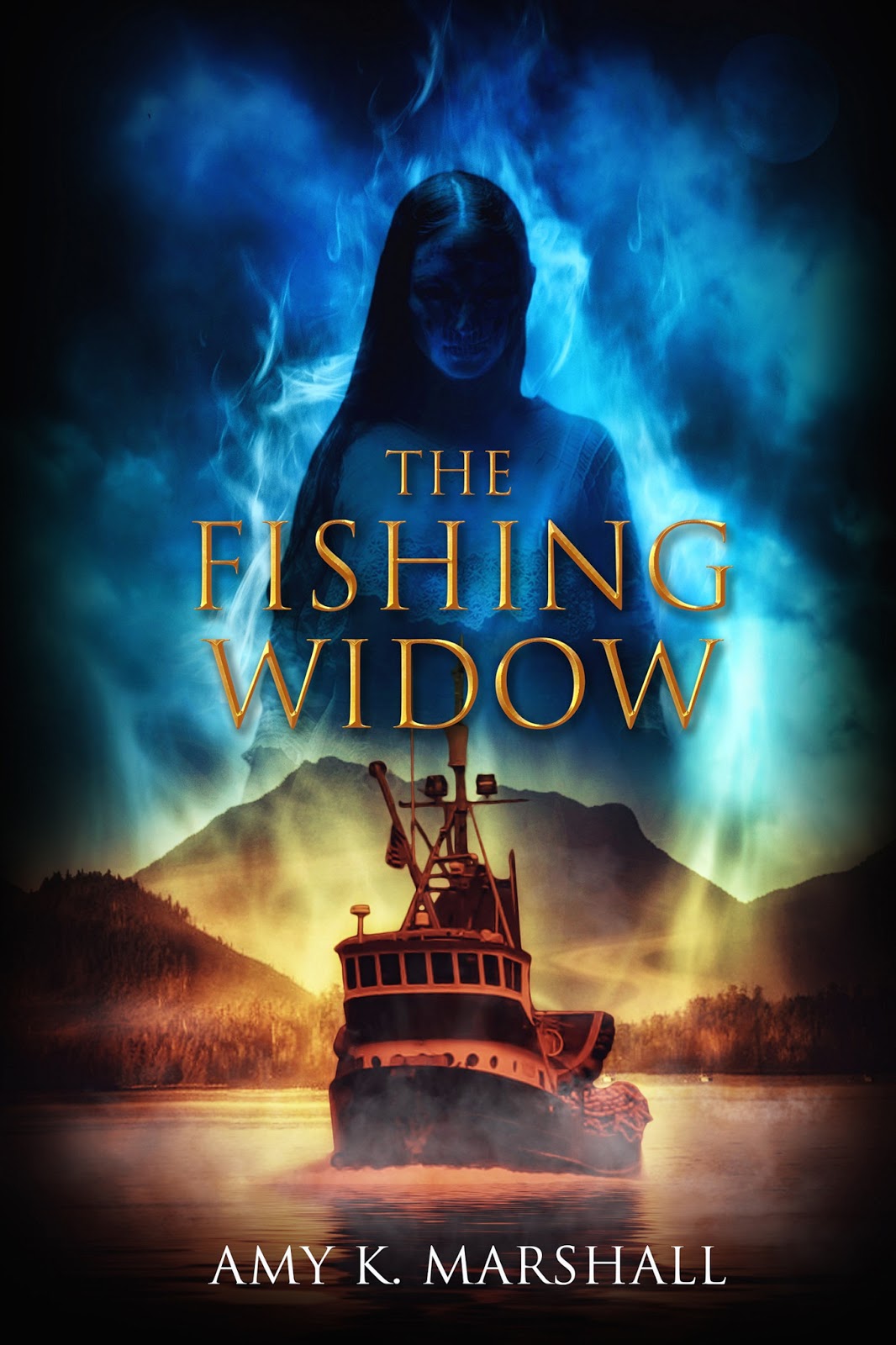
The Horror Librarian: You have referred to yourself as an "Alaskan horror novelist." Can you share with us what that means? (And related, can you tell us about your inspiration for The Fishing Widow?)


Amy Marshall: Alaska is a different creature, and Alaskans definitely are a little more skewed than people Outside. I dunno. Maybe it’s the cold or the dark, or the relentless light of summer, but something puts us all about half a bubble off plumb. I like the colors of light here. I like the stories here. I like the people here. There are such extremes of weather here that Alaska becomes a character in the story. The place is so evocative that you can see ten thousand stories just walking along a rocky beach or hiking a trail in the interior or while you’re cutting wood for the winter.

The Fishing Widow? The joke is that a character from another story who knew he didn’t have a hope in hell of seeing the light of published day freaked out completely (and I have pages of his freak out, they’re really quite chilling and funny in places) and sent his friend Colin over to tell me a story about the two of them before his gig in Cut Time (the novel that will never see the light of day). I was at the sink, washing dishes, when I heard (and this was an audible hallucination) Colin say, “I hear you tell stories good.” I turned and took a swing with a frying pan. Apparently, he ducked, but it was unnerving enough for me to think I was on to something. The crew of The Case in Point is based on every dive crew and field crew I ever worked with. I found myself looking up a lot of what Colin and Ethan (he was renamed) said. I didn’t really know what the Sitka herring sac roe fishery was. I didn’t know much about seine boats in particular. My mother became agitated early on. “You can’t write that! You don’t know ANYTHING about running a commercial fishing boat in Alaska!” To which I replied, “But, mom, I don’t have to. It’s Colin’s boat.”  

Once I started writing, though, everything moved. I mean MOVED; moved in a cosmic way that was positively mind-bending. When I became my small fishing town’s librarian after the initial draft was completed, you can bet there was snickering among my writing friends. But, that wasn’t even the weirdest of the “coincidences” that surrounded the writing of the book. It truly was like the Coelho story where the universe conspires to make your dream come true when you really want it. Things fell into place. If you read the book, there’s quite a bit of Tlingit language in it. Amazingly, whenever I needed a phrase, I was able to come up with it effortlessly. That’s the real deal in there. Like I said, a conspiracy of forces and I had no choice but to get the boys’ story out there.

The Horror Librarian: How do you approach a new writing project? Are you a planner or a panster?

Amy Marshall: It depends, really. I love pantsing. The Fishing Widow was a wildly pantsed novel. I love it when I don’t see things coming. There were a lot of things I didn’t see coming in that one, so readers aren’t alone when they say, “What the—” I found myself scrolling back through text to see if there truly was a breadcrumb trail, and, sure enough, all the hints are there. Even writing it, I didn’t pick up on it.

My fairy tale series is different. Since those stories are based on real fairy and folk tales, I pretty much know how it’s going to go. That said, there were some surprises along the way.

As far as the approach, I sit down with and get to know the characters outside their story. I know that sounds weird, but Colin and Ethan (and the rest of the crew) have a life beyond The Fishing Widow. They all agree it happened, but they’ve moved on. We sit around and talk and joke (Brett and Alex are hysterical together like that). Sometimes they argue like I’m not there. I had knock-down, drag-out yelling fights with Mike [Passarella] because he was so focused on fishing and making Colin’s boat and permit payments that he didn’t have “time” for the horror aspect. I think all that psychosis, and seeing the characters as living, breathing, walking around and trying to date your daughter people makes them real on the page. No. They can’t date my daughter. No way; not ANY OF THEM.

The Horror Librarian: What are you working on right now?

Amy Marshall: In Dark Places: Set in an interior Alaskan copper mine in 1912, it’s a completely different story than The Fishing Widow. The voice is different, the telling is different. It’s not “cinematic” in the least. That’s what happens when you meet new people, I suppose.

The Soul Cages: That’s the second story in Vol. 1 of Dark Soundings. The first story, Salt, was completed last Fall around the time of Coffin Hop (an annual horror blog hop in which I am a habitual offender).

Untitled (sorry): A prequel of sorts to The Fishing Widow that goes back to 1791, the Spanish mission on San Angelo Island, and the origins of the creatures.

The Horror Librarian: Who are your writing heroes?

Amy Marshall: Writing heroes? I love Haruki Murakami, I’m a fan of Douglas Adams. My heroes, though would have to includes Chris Baty (the founder of NaNoWriMo) because of his commitment to the creative potential of every person on the planet, followed by Grant Faulkner (current Executive Director of The Office of Letters and Light) because his soul is so good and his heart follows that, and Hugh Howey, not because he’s so wildly successful as a writer, but because he’s so wildly successful as a human being: he’s approachable and funny, he doesn’t take it all too seriously and he understands that imitation is the greatest expression of fandom. I guess I’ve got this thing about people who genuinely love and support other people. Baty makes me laugh because I believe he really does not realize what he’s done with NaNoWriMo and the full impact of the program.

The Horror Librarian: List five things that are currently on your writing desk.

Amy Marshall:
1. Deftones Koi No Yokan CD
2. A Jump Drive with Tim’s Salt Chuck [Copper] Mine Report that’s waiting for my editing.
3. Lucky Black Bog Cat sculpture from Ireland (make sure you touch the kitty before you leave the house!)
4. A small, green, ceramic turtle (that came from a box of Rose Tea) because Chris Baty once told me that a Green Sea Turtle is my writing totem.
5. A varnished sea urchin fossil. No clue why, but it’s seriously cool.

The Horror Librarian: Do you keep rejection letters? Why or why not? (And if you're feeling brave, how many did you amass before The Fishing Widow)?

Amy Marshall: I have them. I got my first set of rejection letters when I was 15 (after writing my very first EPIC FANTASY NOVEL). They’re all sorts of awesome, but, when I was 15, they were completely and utterly soul-crushing. They’re hand-written notes from the Chief Editors of Ballantine and Del Rey and Daw. They’re full of encouragement and advice. They never came out and said anything like Snoopy ever got. In the end, they realized I was very young, but they also called me “talented,” and that they couldn’t wait to see how I developed. But, the answer was still “no.” and I put them away. And, I put fiction writing away. For years. 

The Fishing Widow wasn’t much different. I sent a cold query to St. Martin’s Press and was staggered when I was invited to send the first three chapters and a synopsis (Oh! The Horror!), but then, the silence was deafening. I received encouraging words (words like: “You should really poke at them!”) from Arielle Eckstut and David Henry Sterry (The Book Doctors), but I didn’t poke hard enough (apparently). Since St. Martin’s never told me no, I choose to have my hand hesitate on the lid of that particular box; my Publishing Kitty is still alive and well in there (until I look … kind of like Schröedinger’s Cat). I received rejections from Pyr (but only because the genre wasn’t quite a fit for them) and two agents (one of whom nearly started a riot in Craig by asserting that her problem with the story is that “it’s all weather, emotions, and mannerisms.” Of course, when I mentioned this to the REAL fishermen, one of them chuckled and said, “Shit, Amy … that’s all we ARE.”)

But, I’ll tell you this. I met Curtis Ebbesmeyer. He’s a scientist who studies ocean currents and debris fields. He came to Craig for Whalefest in 2012. We talked for HOURS about a bunch of things, and then the book came up. He told me about his path toward traditional publishing (want to talk horror? A world-renown and respected scientist who, with an agent, pitched TWENTY-FIVE publishers. He heard back from exactly TWO). He told me how he and others would consider self-publishing over the traditional route. I talked about my beta readers and the feedback I was getting as well as my market. He sat there for a moment and then said, “Really, what are you waiting for?”
Indeed….

Thanks, Amy!

Tuesday, May 14, 2013

Amy Marshall Bio

This week's special guest is Amy Marshall!


Amy K. Marshall has been an archaeologist, conservator, curator, archivist, wreck diver, Yukon Quest Sled Dog Race Project Coordinator, musical theater director, piano teacher, bassist in a B52s Tribute Band, small business owner, blogger on The Weather Underground, DJ, waitress, line chef, and editor. She is increasingly weirded-out by the tendency of writers to refer to themselves in the third person, so --

I hold a B.A. in Medieval History (this should explain the odd jobs thing) and an M.A. in Maritime History & Nautical Archaeology (this should explain the boat-stalker thing). Currently, I am the Library Director for the small fishing town of Craig on Prince of Wales Island in Alaska. In 2011, I was featured in the video series LIBRARIES: A DIGITAL BRIDGE produced by the Bill & Melinda Gates Foundation that demonstrated the potential for broadband connectivity in libraries. I continue to be a manic advocate for literacy in all its forms. I reside in Craig with my husband, two teenagers (this should explain the whole horror-writer thing), dark-fairy-hunting cat, and psychotic-but-sweet Border collie. "Let's Go Fishing" is just another way of saying "I Love You."

Not half-bad for the girl who was born and abandoned in the Grover Bungalow Laundry Mat in Lawrence, Kansas in November of 1964. Hey, mom, thanks for the gift of life, and thanks for the compassion of the dime left behind...

Visit Amy online on her website and  be sure to check back Thursday for her interview!

Wednesday, May 8, 2013

Charles Day Interview


The Horror Librarian: What's your approach to crafting a story?  Are you a panster or an outliner?

Charles Day: I'm an outline type of writer as of late.   I used to just write what I was seeing in my head as I developed a story, but after learning a great deal from my mentors about structuring and plotting, I've been doing better with placing scenes on index cards, and writing outlines to a story idea I have.
The Horror Librarian: Your YA novel, The Legend of the Pumpkin Thief, was recently nominated for the Bram Stoker Award.  What do you like best about writing YA horror?
Charles Day: It brings me back to my happy place as a child. I truly miss all the wild and fun things I did as a kid. So when I write YA, I can get into the mind of my lead character and  go back to having fun doing all the things I admired in my youth. In fact, many of the characters and the scenes I created in Pumpkin Thief were actually some of my pals, and a few things my friends and I did  while running amok on Halloween. We caused terror and mayhem. The only thing missing, no Pumpkin Thief. Thank God!

The Horror Librarian: You're involved in some cool stuff with the Horror Writers' Association such as the mentor program.  Can you tell us a little about that?  Also, what other benefits can aspiring writers find in professional organizations?

Charles Day: Sure. The Mentor Program is designed to place aspiring writers both published or soon-to-be-published, or those who desire to be published some day, with authors who have been successfully published. We have many mentors who also are true professionals and bring so much to the mentor program. Once you're a paid mentor you can sign up for our program. there is a waiting list, but it can move quicker when new or recent mentors are ready to take on another mentee.

Professional organizations are key to helping a writer's career. Now, bear in mind, there are many out there. You need to do your research and find the ones that will help you the most. The Horror Writers Association is the best there is for horror writers.  Great folks, true professionals, and so damn helpful, it's a most for any horror writer.
The Horror Librarian: Tell us about Evil Jester Press.  What can we expect to see this year?  What projects can we look forward to?

Charles Day: We have a line-up of books that will take us into 2014, but we are opening for submissions soon. We are re-designing our website, but you can find up to the minute information on our facebook page. 

We have also recently opened a new division, lead by the super talented, Taylor Grant, our editor-in-Chief, and co-owner. We have some great things coming.

The Horror Librarian: What are you working on right now?

Charles Day: I'm finishing final edits on my YA western horror/fantasy trilogy, Book 1: THE HUNT FOR THE GHOULISH BARTENDER,  and I have two novels-in-progress, IMMORTAL FAMILY (YA) and SUMMER CAMP (Middle Grade), both under the professional wings of Joe Nassise, who's my writer coach for a one year program he offers.

And I'm working on developing a comic book/ graphic novel series for my YA western horror trilogy. I have a few artists and a co-writer  on board. 

I'm also working on some art projects, as I love to draw.

The Horror Librarian: List five things that are currently on your writing desk.
Charles Day: This interview! The two books I just mentioned, my laptop, and the Evil Jester, who's always beside me.

Thanks, Charles!

Monday, May 6, 2013

Charles Day Bio

This week's special guest is Charles Day.


Charles Day A.K.A, the evil little Jester, is the Horror Writer Association's Mentor Program Committee Chairperson and Co-Chair for the NY/LI Chapter, and a member of the New England Horror Writers Association. His biggest successes to date are the recent sales of his first YA western horror trilogy KYLE McGERTT, DESTROYER OF THE INDIAN CURSES, BOOK ONE: THE HUNT FOR THE GHOULISH BARTENDER (Blood Bound Books, Winter 2013) His published works available now are his YA horror novel, LEGEND OF THE PUMPKIN THIEF (Noble YA Publishers LLC.,) his mystery novelette THE PLAN (Naked Snake Press,)and his horror novella LOCKDOWN (Included in Hannibal's Manor, Wicked East Press) which received an endorsement from four-time Bram Stoker award wining author, Lisa Morton.He also edited his first anthology TALES OF TERROR & MAYHEM FROM DEEP WITHIN THE BOX (Evil Jester Press, Summer 2012) compiled with 23 terrifying stories by amazingly talented authors, including four-time Bram Stoker nominated author Jeremy C. Shipp.

Visit Charles online at his website or pop by Evil Jester Press, or its sister site, Evil Jester Comics.

Wednesday, May 1, 2013

Taylor Grant Interview


The Horror Librarian: A bit of a renaissance man, you are an actor, screenwriter, filmmaker, author, script consultant, copywriter, etc. What's your favorite role?  And what have been some of your favorite projects?


Taylor Grant: That’s actually a pretty tough first question. For sheer enjoyment, I’d have to say “author.” Unlike the other roles you mentioned, I don’t have a lot of expectations around being an author other than satisfying my muse. The other roles can become quite complex because all of them require working with other people, budgets, and logistics. But writing stories only requires a writing tool of some kind and my imagination. I feel very blessed that the horror community has begun to embrace my dark fiction.


The Horror Librarian: What are you working on right now?


Taylor Grant: I am just winding down a two-year whirlwind of activity. I co-wrote a film called Sticks & Stones that is screening at the Cannes Film Festival next month, and starred in a short film called Crows that is currently doing well on the festival circuit. Last month I received two Telly Awards for my work as an advertising copywriter, and I have been fortunate to have horror stories published in some fairly high-profile anthologies and magazines, including an upcoming issue of Cemetery Dance. I am currently in pre-production on a film called The Vanished that I wrote and am co-producing.  


Also, I am very excited about Evil Jester Presents, a horror comic series featuring stories from some of the biggest names in the horror industry, including Ramsey Campbell, Jack Ketchum, William F. Nolan, Jonathan Maberry, Gary Braunbeck, Joe McKinney, and 20-odd more world-class writers. It is the first graphic novel published by Evil Jester Comics, sister company to Evil Jester Press, founded by Charles Day.


The Horror Librarian: Tell us about your dream project.


Taylor Grant: In many ways, Evil Jester Presents IS a dream, as I’m able to leverage both my love of horror and comic books at the same time.

However, I do have another project I’ve been developing for many years. It’s a feature length crime thriller that I plan to direct and star in at some point--if the planets align in my favor. It is certainly the most ambitious of my future projects in terms of budget. If it doesn’t come together as a film, then I plan to write it as a novel. Whether it is a film or novel, I think it will be my best work so far. 


The Horror Librarian: How does your experience as a screenwriter influence your approach to writing horror?


Taylor Grant: Years of working as a script consultant and screenwriter honed my ability to develop well-structured plots. In terms of horror, I’m currently focused on short stories, which I see as “mini movies.”  In Hollywood, you have to grab your reader in the first five pages of your script or your sunk. I strive for that on the first page of my horror stories; to create intriguing openings that keep the reader engaged from the first few sentences--and hopefully--keep them turning the pages.


The Horror Librarian: List five things that are currently on your writing desk.

Taylor Grant:

a). A two year-old gift card for a massage that, sadly, I have yet to use.

b). A bottle of Stevia.

c). Writing 21st Century Fiction by Donald Maass.

d). A toy Captain America motorcycle that my son left on my desk. (He knows Cap is my favorite hero.)

e). A stack of papers that is precariously close to falling…


The Horror Librarian: What are you reading, viewing, listening to this month?

Taylor Grant:

a). I’m rereading Al Sarrantonio’s anthology “Toybox.” I’m telling you, the man is criminally underrated.

b). My favorite comic of the moment--much to my surprise--is Thor: God of Thunder. It is extremely well written, imaginative and beautifully illustrated.

b). I’ve been listening to a lot of blues-rock lately, particularly from a band called Indigenous that harkens back to old Stevie Ray Vaughn.

c). I’m enjoying the hell out of Game of Thrones, BBC’s Sherlock, and Mad Men

Thanks, Taylor!

Monday, April 29, 2013

Taylor Grant Bio

This week's special guest is Taylor Grant!


Taylor Grant is an author, multi-hyphenate filmaker, actor, Hollywood script consultant, and award-winning copywriter. His work has been seen on network television, the big screen, the web, newspapers, comic books, national magazines, anthologies, and heard on the radio.  He is an Active Member of the HWA and is currently the Editor in Chief of Evil Jester Comics, a recently launched publishing company dedicated to quality horror comics.  His horror stories have been published in the Bram Stoker nominated anthology Horror for Good, as well as A Feast of Frights from the Horror Zine, Box of Delights; the forthcoming anthologies Horror Library Volume 5, Fear the Reaper, Blood Type, Nightscapes Vol. 1, and Cemetery Dance Magazine.

Visit him online at his website and the Evil Jester Comics webpage.

And don't forget to come back Wednesday for Taylor's interview!


Friday, April 26, 2013

PPWC13: Character Building with Tony and Dr. Phil

This workshop was led by Jaxine Daniels.  Although these are my notes, the workshop content is attributed to Jaxine and the participants who offered input and discussion.

"I believe that all good fiction is character-driven." - Jaxine Daniels (and a lot of other people besides)

The Question:  What makes people tick?

The Answer: Goals, Motivations, & Conflicts (GMC, Debra Dixon)

Good story forces characters to redefine their beliefs, values, and priorities.  Ask yourself:  What would make someone behave this way?  What would they have to believe to do that?

Discomfort = Conflict
  • Your job as a writer is to torture your characters.
  • Put them in positions/situations they wouldn't ordinarily find themselves in.
  • It all has to be motivated and catered specifically to that character.
  • Remember that villains are people too.  They have their own GMC.  They believe they are the heroes of their own story.  
Dr. Phil's Life Law #3
People do what works.  Everything we do is for a payoff. 

Payoffs can be:

(1) Monetary: easy to measure
(2) Psychological: acceptance, approval, praise, love, companionship, greed, punishment, safety, security, fulfillment
(3) Spiritual: peace, sense of connectedness with a higher power, righteousness, morality
(4) Physical: sense of well-being, eating right, exercising, intimidating others, preoccupation with own body (or the body of another), self-afflicted pain
(5) Achievement: accomplishment, recognition, a job well-done
(6) Social: feeling a part of a group, contribution, leadership, obligation, craving social acceptance

*Most people approach payoff through the path of least resistance.  Sometimes it's just easier not to.

Pain
"People go to far greater lengths to avoid pain than they do to obtain what they desire." - Tony Robbins

The anticipation of pain can often be greater than the pain itself.  Intense pain can be a motivator for characters to change.

Values
Values can affect wants and desires.  They are more vague than goals; once they are more focused, they become goals. Each of these (listed below) has associated behaviors.  We all define values define values differently.  What does it mean to be free?  To be secure?  To fail or succeed?

Positive Values (what they seek): Love, freedom, intimacy, security, adventure, independence, power, success, comfort, health, growth, happiness, fun, creativity

Negative Values (what they seek to avoid): Rejection, frustration, failure, humiliation, loneliness, guilt, jealousy

Fear
Most people are motivated by fear.  Fear can be someone or something threatening a person's values.

Recipe for Great Conflict:
Pit one good value against another.
  • compassion vs honesty
  • contentment vs adventure
  • power vs intimacy
  • justice vs truth
  • security vs happiness
  • truth vs loyalty
Beliefs
Beliefs tend to be emotional and extreme.  They can be illogical and not well-thought out.  We show our beliefs by what we say, how we act, our internal dialogs, our external relationships.  Not every character needs a traumatic childhood.  But everyone carries baggage.  Little things make up most of our scars.  Focus on the heroes' belief system by showing them in action.

Currency
Currency is what matters to a person.  Women express their feelings in words.  Men use their own currency.  Men will give to those they love in their own currency - whether they value that or not.  Figure our what he values and then watch and see if he's giving that or not.

Men are highly competitive.  They never stop wanting to be the knight in shining armour that saves the damsel in distress.

Example:  What values can come crashing together? A knight wants to take care of the damsel.  But the damsel wants to take care of herself.

How do we show it?  Visual, auditory, kinesthetic.

"Give your characters dreams worth failing for."

A Note About Writing About Tweens & Young Adults:
Young people haven't quite figured out their own values and beliefs.  They usually carry around their parents' beliefs (or) are rebelling against their parents' beliefs.  Usually, it is a combination of rebellion and owning parent/guardian belief/value system.

Thursday, April 25, 2013

PPWC13: Pacing, Fast as a Snail

This workshop was led by Deb Courtney.  Although these are my notes, the workshop content is attributed to Deb and the participants who offered input and discussion.

What do editors, agents, and beta readers mean when they say "The Pacing is Off?"
- There is too much irrelevant information.
- You haven't ramped up the conflict enough - readers aren't interested.
- The description is too heavy - too many adjectives and adverbs.
- Your action scenes feel too slow.
- There is too much or too little exposition.

When the "Pacing is Off," one of three things might be the culprit:
(1) The story didn't start in the right place.  Solution: change the scene.
(2) There is too much extraneous information.  Solution: tighten prose.
(3) An actual pacing problem.  Solution: see below. 

"Pacing" = the speed at which your novel or parts of your novel move.

Generally speaking, fight scenes should be fast-paced and romance scenes should be slow-paced.   If your pacing is off, readers will have trouble connecting with your story and your characters.  For example, if a romance scene is written with a fast pacing and uses a lot of short choppy sentences, the readers are not going to come away with the emotive quality the romance scene requires - they will feel uneasy. 

How to Spot Pacing Problems:
(1) Look at the conventions of your genre.
(2) Review your overall story arc.
(3) Comb through your manuscript, scene by scene.
(4) Review the lists below to ensure you are using the appropriate technique to obtain the desired pacing.

Move Scenes Faster:
  • action
  • reduce narrative
  • eliminate inner thoughts and reflection
  • pull in tight (as in a camera angle)
  • stick to one POV
  • use short sentences and words
  • eliminate adverbs
  • minimize dialog to only what is crucial, absolutely necessary
  • use vocab with auditory resonance - hard consonants 
  • short paragraphs
  • what you let sit as a standalone phrase, sentence.
  • condensation of concepts, ideas
  • don't list - this is bad for escalation of tension
Move Scenes Slower:
  • Reflect and describe
  • eliminate action
  • pull out wide - have characters things
  • lengthen sentences and words; be holder with complex sentences
  • use some adverbs and adjectives (but not too many, remember what Stephen King says: "The road to hell is paved in adverbs.")
  • use dialog more loosely (but never really loosely; dialog must fulfill its role properly)
Good Examples:
The Haunting of Hill House by Shirley Jackson
"Hills Like White Elephants" by Ernest Hemingway

Wednesday, April 24, 2013

PPWC13: How to Write a Successful Novel Synopsis

This workshop was led by Terry Banker.  Although these are my notes, the workshop content is attributed to Terry and the participants who offered input and discussion.

The key to a good synopsis is two-fold:
  • Know your story.
  • Know your characters.
A Synopsis can be described as the following:
  • a summary with feeling
  • a brief story bridge
  • a promise, encouraging the reader's trust
  • a summation of interesting characters in crisis with a fulfilling solution.
What Agents Look At: Page 1 and the Synopsis.  They want to know, in roughly this order: Can the writer write?  Can the writer pull off the ending?  Can the writer be entertaining?

Terry recommends two techniques:
 (1) The Story Sentence (Gary Provost)
 (2) The Heroes Journey (Christopher Vogler)

Every synopsis begins with the Hook.  The hook is one sentence meant to encapsulate your entire novel and pull the reader into the story.  Include who, what he/she wants, and why they cannot achieve his/her goal (which implies the ending).  Remember, fear, sex, and curiosity always hook readers but curiosity is never enough.  And the shorter the sentence, the better. 

The Story Sentence
This is a good synopsis style to begin with as it helps you construct the basic structure of your synopsis.  This type of synopsis is composed of 11 parts and can be condensed into one paragraph or expanded into 11 paragraphs, or the basic 1-2 page synopsis.  This synopsis should really only focus on the main characters, protagonist and antagonist, and the main conflict (ie. one clear path to the end).  Think of the story sentence as a chart; for each numbered phrase, write a sentence which describes your novel's equivalent action.  

(1) Once upon a time, something happened,
(2) to someone, and he decided that he would pursue a goal
(3) so he devised a plan of action, and even though
(4) there were forces trying to stop him, he moved
(5) forward because there was a lot at stake and just as
(6) things seemed as bad as they could get, he
(7) learned an important lesson, and when
(8) offered the prize, he had sought so strenuously,
(9) he had to decide whether or not to take it
(10) and in making that decision he satisfied a need that had been
(11) created by something in his past. 

The Heroes Journey
This is a technique for further fleshing out your synopsis.  Using this method, you can expand your synopsis to eight pages. Using this type of synopsis, necessary secondary characters can also be included as well as subplots.  Obviously, knowledge of Christopher Vogler's work is required to be able to take full advantage of this technique, but it is well worth the read.

(1) Heroes are introduced in the Ordinary World, where
(2) They receive the Call to Adventure
(3) They are Reluctant at first or Refuse the Call, but
(4) Are encouraged by a Mentor to
(5) Cross the First Threshold and enter the Special world, where
(6) they encounter Tests, Allies, and Enemies.
(7) They Approach the Inmost Cave, crossing a second threshold
(8) Where they endure the Ordeal
(9) They take possession of their Reward and
(10) are pursuing on The Road Back to the Ordinary World
(11) They cross the Third Threshold, expereience a Ressurection, and are transformed by the expereience.
(12) They Return with the Elixir, a boon or treasure to benefit the Ordinary World.

Tips on Writing the Synopsis:
  • A synopsis is Not a writing sample.
  • Synopses should include tone as well as the author's voice.
  • Do Not include dialog.
  • Don't waste real estate - every word matters.  No repetition.
  • Absolutely NO CLICHES!
  • Limit adjective and adverb use.  Instead, use strong verbs.  
  • Follow a logical organization.
  • Use third person past tense.
  • Don't forget to include what is unique about your novel/approach.
  • Correct use of punctuation, grammar, and spelling.
  • Include the end.